
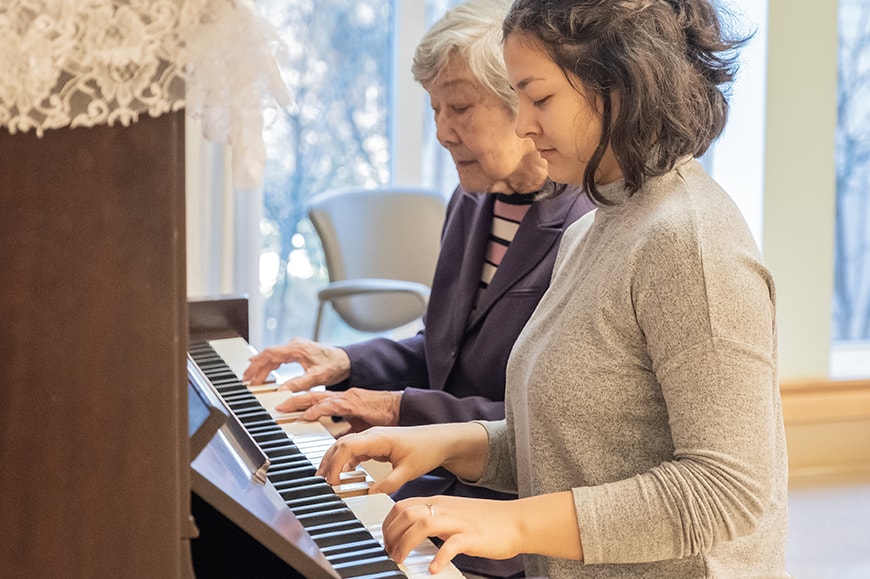
Volunteers perform many important duties that support both patients and the broader community. Whether providing companionship, assisting with a special event, or managing administrative tasks such as phone calls and letter writing, volunteers play a vital role that enables the hospice to meet the needs of the community more fully.
How Do Hospice Volunteers Help?
Hospice volunteers are essential to providing the level of care and support that patients and their loved ones expect from hospice care. The primary goal of a hospice volunteer is to provide empathy and companionship to both the patient and their loved ones during difficult times, helping to ease feelings of loneliness and provide emotional support. While volunteers play a meaningful part in the care experience, they do not perform any medical or clinical tasks. Duties of a volunteer vary depending on the needs of the patient/family they are supporting. In addition, volunteers may assist with community outreach, fundraising efforts, and administrative tasks such as phone calls and letter writing. Through participation and engagement, hospice volunteers find value in their devotion to patients, their loved ones, and their community.
The Benefits of Hospice Volunteers
The value of hospice volunteers extends far beyond what is often expected, offering meaningful benefits to both patients and their families. Volunteers enhance the overall care experience by providing dedicated time, compassionate presence, and emotional support that complements the work of the hospice team. Through empathetic listening, engaging activities, and helping patients feel seen and connected, they improve quality of life during a critical time. Volunteers also support communication by sharing observations with hospice staff and may assist with non-medical daily living needs, helping ensure patients feel comfortable, supported, and less lonely.
Comforting Volunteer Support
Hospice volunteers provide a comforting and reassuring presence for patients during a deeply personal time. By simply being there, they create a safe space where patients feel heard, valued, and understood. Volunteers offer compassionate listening, allowing patients to share their stories, fears, and hopes without judgment. Hospice volunteers also enjoy spending time with the patient, participating in some of their favorite pastimes, like playing chess, cards, or watching TV. Their presence brings a sense of calm and connection and eases feelings of loneliness.
Communication
Volunteers play an important role in supporting communication between the patient, family, and the hospice care team. Through regular interaction and attentive listening, they can help share relevant observations and updates, promoting a clear and consistent flow of information. The collaborative connection helps ensure that everyone remains informed and that the patient’s needs and preferences are understood and supported.
Administrative Volunteering
Besides working with hospice patients directly, administrative volunteers play an essential role in keeping hospice operations running smoothly through office-based responsibilities. They assist with tasks such as working in a thrift shop, coordinating support services, fundraising, answering the phone, mailings, photocopying, and data entry. There truly is a volunteer opportunity for every person, no matter their time, resources, and/or physical abilities.
Hospice Volunteer Onboarding & Training
Volunteers must complete onboarding and training to ensure they are prepared to fulfill the tasks required of them. Training can vary depending on a volunteer’s role within the organization, but generally, all volunteers receive a similar basic instruction. These various levels of onboarding and training may include:
- Onboarding paperwork
- Background check and/or fingerprints (depending on state requirements)
- Proof of a negative TB test (in-person volunteers only)
- Role-specific training, including topics related to the mission and philosophy of hospice care
- Best practices, procedures, and precautions
- Communication skills
- Boundaries of interaction
- End of Life processes
- Grief support
Having a strong foundation of knowledge and skills in these areas empowers hospice volunteers to perform their duties with confidence, compassion, and purpose, ensuring that their patients experience comfort, dignity, and the highest possible quality of life.
How to Become a Hospice Volunteer
To volunteer with The Care Team, contact volunteers@tct-cares.com for more information.