Falls can be a big concern, especially for older adults. In fact, according to the National Institutes of Health (NIH), more than 30% of people age 65 and older fall every year. Falls can also lead to serious injuries, including traumatic brain injuries, hip fractures, and other complications.
But many falls are preventable. By understanding potential fall risks in and around the home, you can take simple steps to help protect yourself and the people you care about.
Common Fall Risks at Home
Some fall risks are easy to spot, while others may be overlooked. Paying attention to these six potential hazards can help make the home a safer place.
1. Poor Lighting
When you can’t see well, it’s easier to trip or lose your balance. Make sure frequently used areas of the home have adequate lighting and that light switches are easy to reach.
Motion-sensors or night lights can also help illuminate hallways, bathrooms, and stairways, especially at night.
2. Pets and Pet Items
Pets can make wonderful companions, but they can also unexpectedly get underfoot. Before standing or walking, take a moment to notice where pets are in the room.
Pet beds, toys, food bowls and other items can also become tripping hazards. Keeping these items away from frequently used walkways can help reduce the risk of a fall.
3. Loose Cords and Clutter
Electrical cords, wires, and everyday clutter can create unexpected obstacles. Keep cords against walls rather than stretched across rooms or walkways and remove unnecessary items from frequently traveled areas.
Pay particular attention to pathways between commonly used spaces, such as the bedroom and bathroom.
4. Loose Rugs and Carpeting
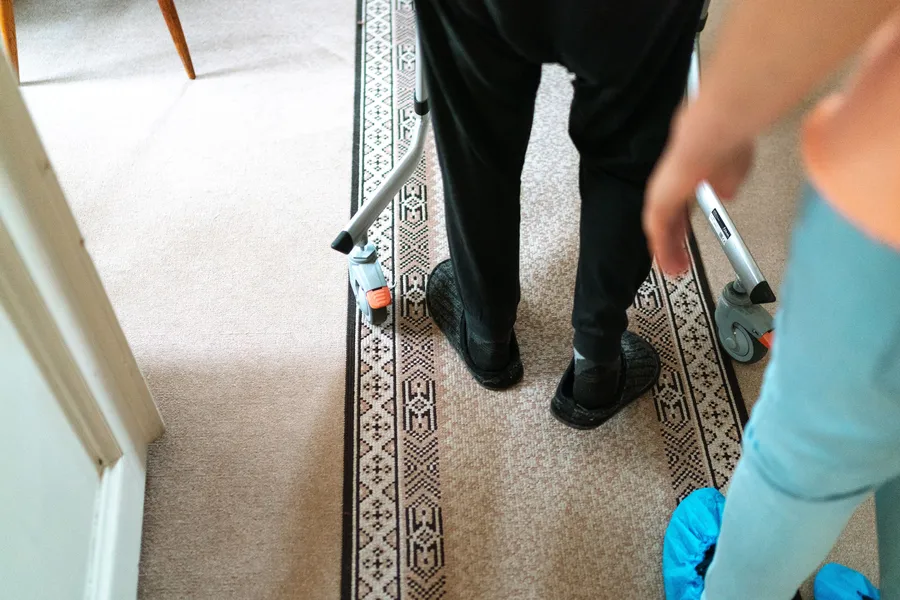
Rugs and carpeting can become hazardous when they slide, curl, or bunch. Feet, walkers, canes, and other mobility aids can easily catch on loose material.
Consider removal of rugs, or secure rugs and carpeting when possible and make sure walking surfaces remain flat and unobstructed.
5. Foot Conditions and Improper Footwear
Foot pain, sores, or injuries can affect the way a person walks and make it more difficult to maintain balance.
Footwear matters, too. Avoid shoes or slippers that don’t fit properly or have little traction. Instead, choose footwear that fits securely and has sturdy, non-slip soles.
6. Dizziness or Unsteadiness
A variety of factors can contribute to dizziness or unsteadiness, including medications, dehydration, weakness, and changes in health.
To help reduce the risk of falling:
- Get up slowly, especially after sitting or lying down for an extended period.
- Ask for assistance when standing or walking if you feel weak or unsteady.
- Keep fluids nearby and follow the recommendations of your care team regarding hydration.
- Talk with your care team about medications or other factors that may be contributing to dizziness or changes in balance.
Don’t Forget About Outdoor Hazards
Fall risks aren’t limited to the inside of the home. Changing weather and outdoor conditions can create additional hazards.
Watch for uneven pavement, wet leaves or grass, ice and other slippery surfaces. Keep walkways clear of objects and use extra caution when conditions make walking more difficult.
Supporting Safety and Comfort at Home
For people living with a serious or life-limiting illness, changes in strength, balance, mobility or medications can increase the risk of falls. As these needs change, having the right support at home can make a meaningful difference.
The Care Team works with patients and families to help create a safe, comfortable care environment. Our interdisciplinary hospice team can help identify changes that may affect a patient’s safety, recommend appropriate equipment and support, and provide education to help families and caregivers confidently navigate changing needs.
If you or someone you love is living with a life-limiting illness, contact The Care Team to learn more about how hospice care can provide comfort, support, and guidance at home.